

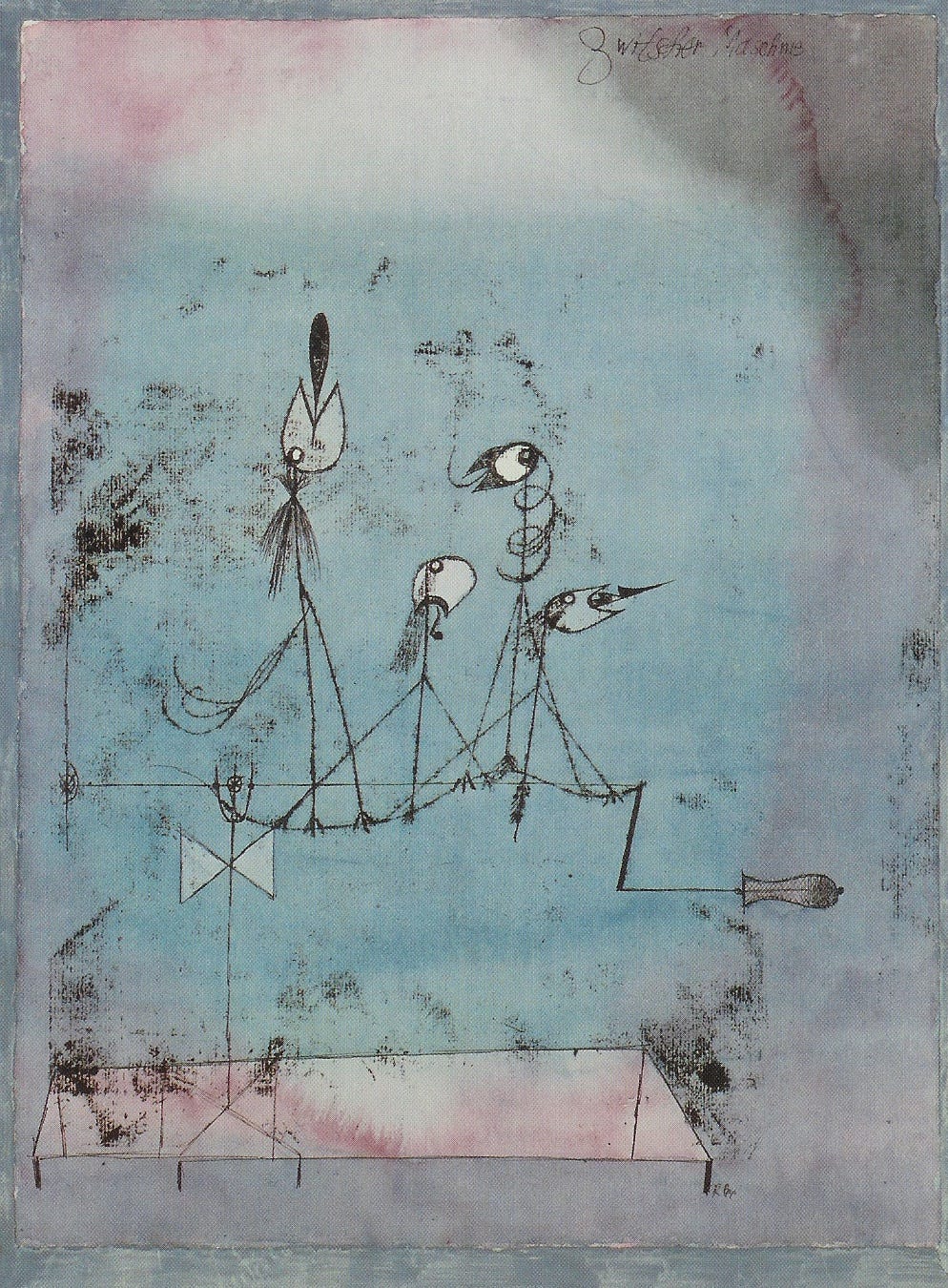
All art is a memory of age-old things, dark things, whose fragments live on in the artist.
–Paul Klee
What did I learn from writing every day for six months? Which aspects of writing got easier? Time to reflect on what was evergreen.
On Saving Energy
This ended up being very important. If you are writing every day for six months, there will be many days when you are thinking about other things, doing other things, or otherwise can’t really write.
When I was writing every day for 30 days, I sort of hoped that I wouldn’t get sick on any of those days, and otherwise did not have a plan. When I was writing for six months, I had the opposite assumption. It was unlikely I would not get sick at all, and I would need a plan.
The strangest thing I learned was that it was easier to write when I myself was sick, than when somebody I really cared about was sick. When I myself am sick, I can still keep my attention on myself and on my thoughts for long enough to write a blog post that feels honest and true and worth reading, and to hit publish. When somebody else is sick, I would be much more likely to forget the daily writing goal entirely until my “don’t forget to write” alarm goes off, and then taking time to write would feel indulgent. My attention would simply be elsewhere.
When I was sick, I actually found that I could meander a bit, the goal being not to strain myself too much. When somebody else is sick is actually when I learned to write fast—go-go, done, back to whatever I was doing.
Here are the tricks I learned for saving energy, to make it in the long game:
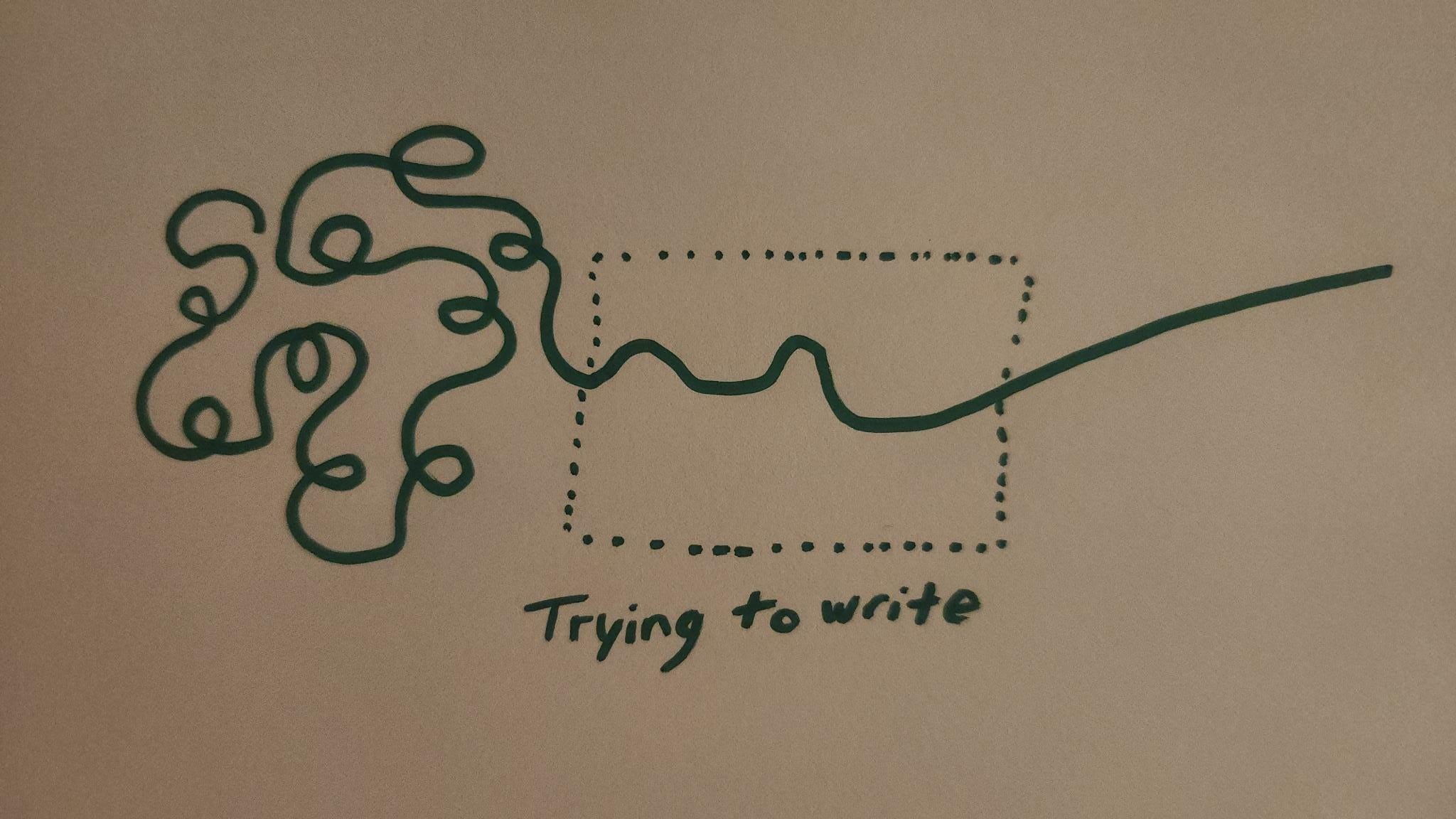
Just write it down, without editing it in your brain
If writing is “saying something” then editing it right after you’d already said it means doing a lot more extra work. You can just write it down, and chances are it will come out as simple and coherent. Your brain has a very advanced capacity for self-organization, and you are likely already more organized than you think you are.
If you feel disorganized, chances are the thought is not as disorganized as your feelings surrounding whether you like the thought or not. In that case, still just write it down. You can write what already feels clear to you despite emotional confusion—this is likely to come out naturally and organized first, and quickly. Then, what is confusing will emerge organically, and you can save the confusing emotional crux for a Part II. “Leading the reader to the hard thing” is generally a kindness. In craft, it creates a good introduction to the hard thing and works as a friendly setup for why the hard thing matters. The reader would encounter this as helpful and good writing.
The act of writing itself helps you clarify what you want to say, and so spending the time clarifying, writing, is killing two birds with one stone.
Notice which part of the process you are in
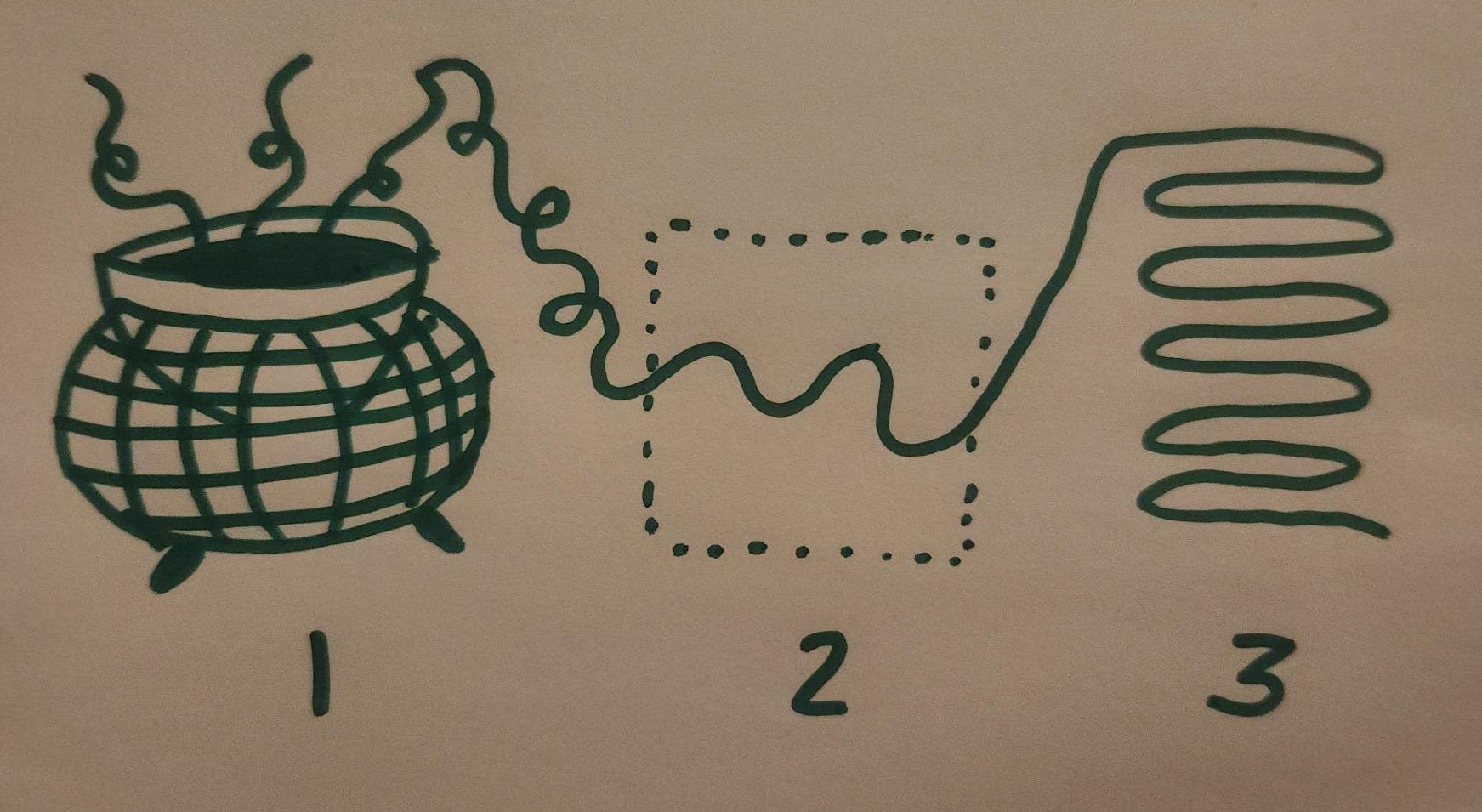
If you are writing every day, spending too many cycles just to end up saying the same thing you wanted to say the first time means a lot of extra energy is used up.
My first time at Inkhaven, I wanted to spend a lot of time socializing, and so I knew that I would have to figure out how to reduce redundant time use, or else burn out. This continued to be important in the marathon-writing as well because I was still working my job and doing other things.
One major way to reduce redundancy is to separate the “just write it down” and the “I’ll edit this” stages of writing into two very distinct stages in your workflow. Two stages may seem like a lot, compared to one fused stage, but the total of two stages is a lot fewer than the potentially ten stages you would have if you were editing it and recursing on the writing in your mind.
I do believe that recursion often makes writing better—whether it’s another editing pass or another pass at deeper thinking. But I would make those recursion stages their own special stages.
There is a downside of this certain very specific goopy mind-recursion, which is that your brain tends to be pretty organized, and in running this process you may accidentally make it less organized.
I consider this different from “figuring out what you want to say” which usually involves stewing on something for a while in an extremely nonlinear fashion.
Noticing which stage of the process you are lets you have the most indulgent fun in that actual process, without the constraints of another part of the process creeping in, and keeps you organized.
At Inkhaven1, I wrote my ideas on a piece of papyrus, free wrote on the typewriter in the morning, and then in the evening I edited my writing on the computer. Thus, the stages were separated both in the equipment that was used, and separated in time.
Write about what you are already thinking about
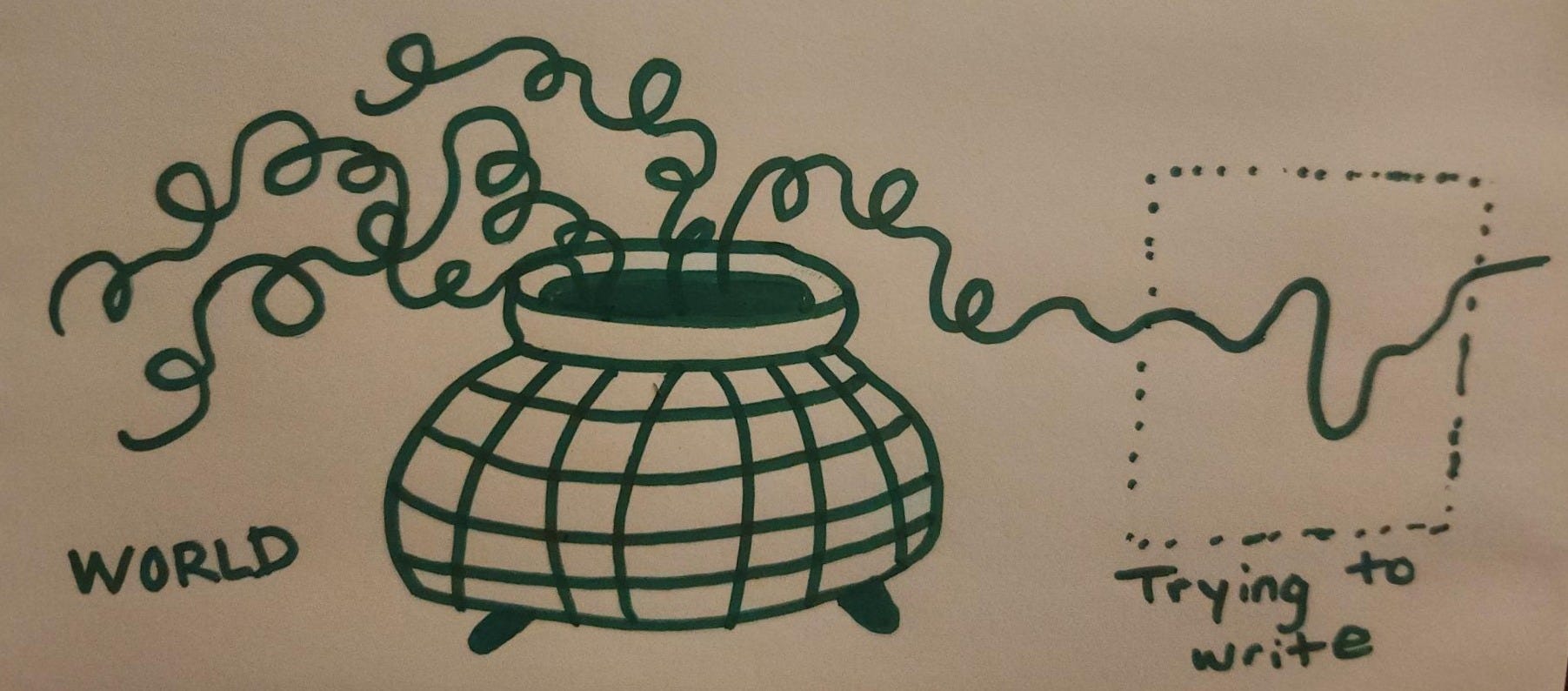
On some days when I didn’t feel like writing anything at all, and then when I thought about why, it was because I was saturated. Something happened that day, or I was making plans to do something, or I was overwhelmed, or I had feelings I needed to process.
One of my favorite things about having written every day was the feeling of surprise at how many things would simply not have been written ever because I did not want to write.
The constraint of needing to write that day, and not for example writing two posts the next day if I missed a day, meant that I ended up just writing down the most interesting thing that happened that day. This post about visiting the largest glass museum in the world would never have been written, if I didn’t have to write that day. I was really tired.
Travel writing or adventure writing was not my current genre, but if you keep an open mind to genre, then the things that are happening to you are a wonderful cauldron of ideas.
You may think that this is “cheating” but I promise you will forget about the cool thing that happened that exact day, and never write about it ever again, and it will never be written. The only way you will remember it again is by looking at your old writing.
On Hating Your Own Writing
There will be moments in writing every day when you hate your own writing and think the entire endeavor is a waste of time.
I consider this a separate set of questions from saving energy, though this is a major way that energy gets spent.
You can still write, and produce really terrific writing, even when your heart is not fully into it, if you are organized and trust your processes.
Protecting your ideas
You are allowed to despair, and you are allowed to despair a lot. That being said, your ideas should be protected from your despair.
Have a container that you like, that makes you feel cozy and safe, where you put different things like your ideas, snippets of conversations, sudden bursts of inspiration, where they get saved and undamaged that you trust, and know where to go to check when you need that type of object.
For some people it’s just the default notes app in their phone. Some people really hate that user interface. Maybe for you it will be a notebook, or an email thread to yourself. The important thing is that you know where you will check when you want to look for your ideas cauldron.
Penholder Friction
Relatedly, when you are ready to write, you want to make sure that you have a pen—whatever your version of a pen is.
Nobody likes that feeling of being really excited to write something down, but not having a pen.
Everybody knows that if there is a pen-holder in a house, the pen-holder seldom moves. It is kind of heavy and nobody ever has a real reason to move it. And everybody knows the disappointment of needing a pen, diligently going to the pen-holder, and noticing there are no pens. Or that there are many pens, but none of them work.
These are the feelings that you are trying to avoid. You want to go to the pen-holder, see pens you like, take the pens you like, and feel good about the entire process. You want to reduce “pen-holder friction” where it is not necessary.
You want to follow the fun. The things that feel like they are fun, or that they feel like they are working, or that do not feel like work — that’s what you want to be doing more of. When it feels fun and joyful and unhinged and unfiltered and relaxing — these are good feelings! You want to be feeling that. This is important for anything long-term. Trust your own inner critic and your own inner project manager — trust that they will still be there even when you are not looking at them, and they will come out and say stuff to you when they feel like it. These are not particularly self-filtering or self-isolating parts of your psyche. They will come out and have meetings with you. Don’t feel like if they aren’t looking over your shoulder for a while, that this means you are doing something wrong. Probably it means they trust you to do something right without supervision.
Knowing where your pen is means that you can follow the flow right when you feel it without any additional friction.
On Metaposts
Sometimes what feels like fun is a metapost, and then you feel shame. Why am I writing about writing? Why am I writing about my time at Inkhaven?
I would stop feeling the shame. Often these posts end up being treasures, and actually do not end up getting written “later.” If you aren’t happy with your volume of metaposts, you can do one of two things:
Write about whatever was happening that led to your feeling of excitement to write this metapost. Maybe it was a cool conversation, or a cool walk, or maybe you went to a conference and on coming back are reflecting on writing. Explicitly spelling out what was going on can make this metapost more interesting, and have more very specific details about your environment that can be very interesting later!
Commit to doing 1, and just split them up into two posts. Write a post about whatever felt immediately pressing or inspiring or burdensome that led to the metapost, as one post, and then write the metapost without much of an eye for craft. This way, you do not have to feel embarrassed about “wasting” a post on a metapost.
Commit to writing two posts every time you do a metapost, about whatever you want, and don’t worry about trying to make the metapost good. If you are embarrassed about it as a genre of “not real writing,” do write it, sloppily, whenever you feel the inspiration, but also write something else. If you don’t have inspiration, write about the last book or movie you liked, or the last event you went to that was interesting. The idea is if you are embarrassed about your metapost genre writing, use it as a reason to practice disciplined craftsmanly genre writing for a genre you want to practice more, and maintain your internal self-respect.
Whichever route you choose, the point is that shame is heavy, and if you are not writing from your place of shame, it is not helpful to good writing. Writing through the shame can be a lot more productive. And so if a metapost shines brightly through you, write the thing! Get it out! And then if you have shame around such feelings, use another strategy above and move along! But don’t let the shame either stop you from writing what you want, or become stuck inside you such that you don’t end up writing other things either.