


The Nicolas Cage film is like a box of chocolates; you never know what you’re going to get. It can be good, it can be bad. When you turn one on, the one certainty is that Nicolas Cage is in it.
The subject of the Nicolas Cage film is intriguing to me both in film theory and acting terms, but also on existential terms. Here is a man who had gained a reputation, even among famous and wealthy actors known for their work ethic, for having a unique work ethic and project schedule that other actors do not typically commit to.
The products of his work ethic speak for themselves. He has has 71 wins and 123 nominations for various awards over his career.
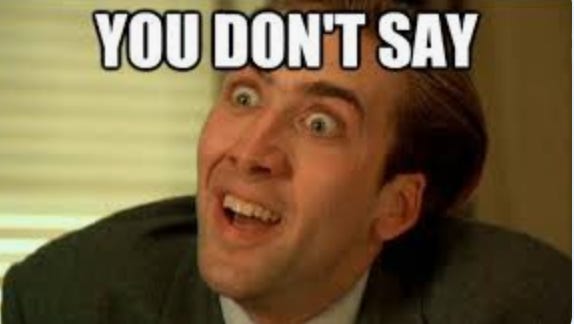
But apart from his work, there has emerged a Nicolas Cage phenomenon that transcends both any single work or his body of work. The phenomenon is hard to describe. Of course, there is the famous “You don’t say?” meme with his face, but that is a symptom of the phenomenon, not the cause or nearly the entire manifestation.
Perhaps part of the phenomenon is that there is a kind of wager here. Some of his films, like Pig (2021), do not advertise much about what you are getting yourself emotionally into very much at all. You know that you will be watching a Nicolas Cage film, and you know that you will be watching the actor give his all, but otherwise you are allowing yourself to view and be transformed by whatever is about to be happening.
What makes it a Nicolas Cage film versus a film with Nicolas Cage?
Not every film with Will Smith in it is a Will Smith Film. Not every film with Natalie Portman is a Natalie Portman Film. Some are; I cannot think of Men in Black without Will Smith, and I cannot think of Black Swan without also thinking about Natalie Portman.
But of the over 100 films in Nicolas Cage’s discography, it is of particular interest that most of them, rather than the minority, are considered Nicolas Cage films.
He plays the lead most of the time, and this isn’t because he has to play the lead as part of the structure of a franchise. National Treasure and Ghost Rider are the exceptions in his film career, but apart from that, he plays a completely different character every time.
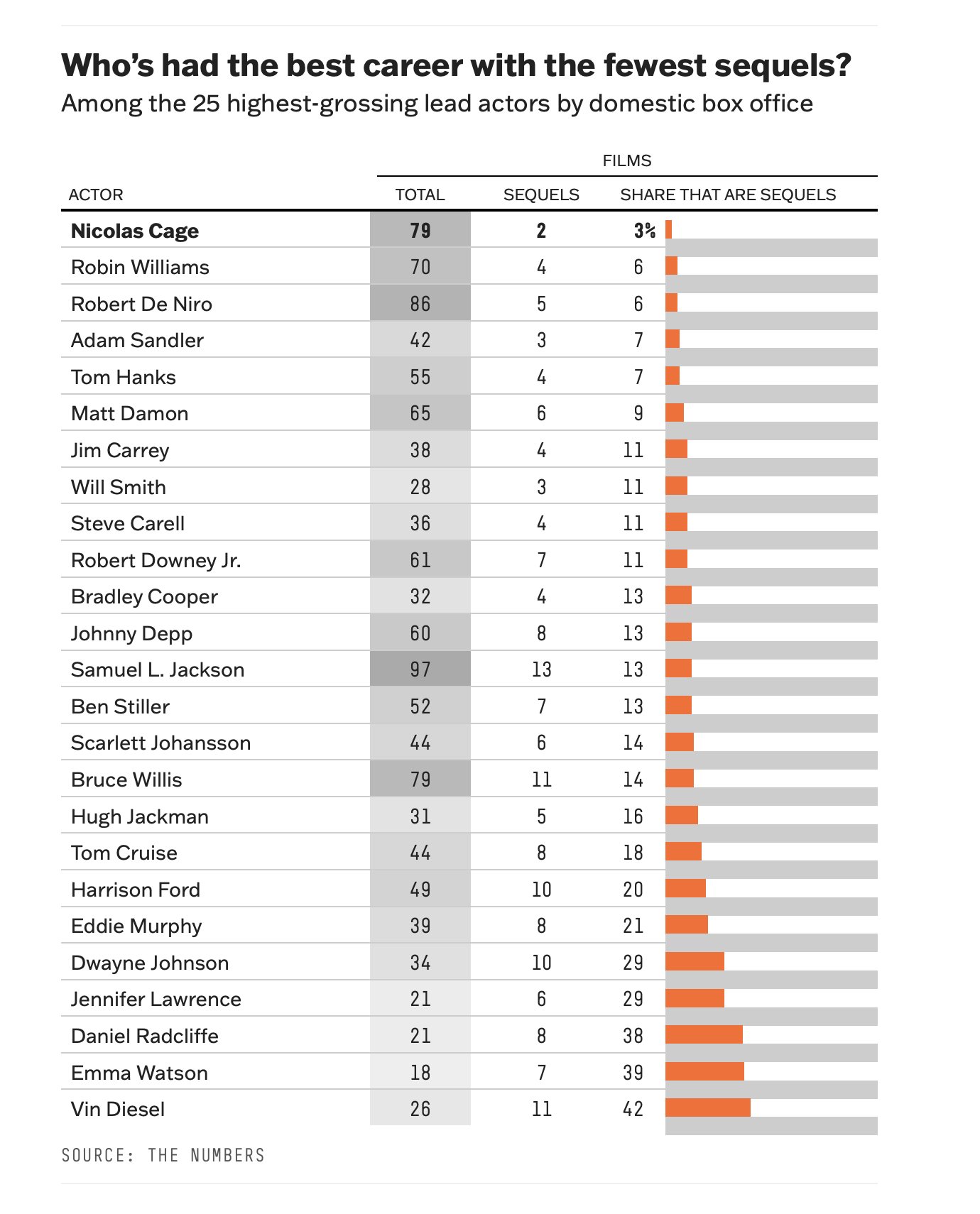
A chart from 2018 by Walt Hickey at FiveThirtyEight shows that Nicolas Cage has the smallest percentage of his filmography consist of sequels (and at 2—the fewest period) among the 25 highest-grossing lead actors. Given Cage’s famously fast and demanding rate of work, this chart would be outdated, but Cage has not done any more sequels since 2018:
It’s less that he’s in the film. Nicolas Cage is the film for most of his films.
Is there anything about a Nicolas Cage Film that makes it so, other than the presence of Nicolas Cage?
Is there enough in common between the over 100 Nicolas Cage films that can constitute the Nicolas Cage Extended Universe? Is there something he is doing or something he is being?
An experiment in April, 2024, in Los Angeles, was conducted to find answers to these questions. One or two Nicolas Cage films were watched every day for a week. Most people have seen multiple Nicolas Cage films in their lives, but is there something new we can notice when we are powerwashed in the face with Cage-ness over a concentrated period of time?
The Films watched during Nicolas Cage Fest included:
Dream Scenario (2023)
The Unbearable Weight of Massive Talent (2022)
Pig (2021)
Wild at Heart (1990)
Willie’s Wonderland (2021)
The Wicker Man (2006)
Face / Off (1997)
Other films included in this analysis, but not watched during the week of Nicolas Cage Fest will be:
Longlegs (2024)
Lord of War (2005)
National Treasure (2004)
Mandy (2018)
City of Angels (1998)
Con Air (1997)
Moonstruck (1987)
The analysis will begin by noticing if there are any archetypes that are persistently present in these films. Each of Cage’s characters is singular, but are there any thematic modes that we noticed?
Sexy Cage and Sneaky Cage
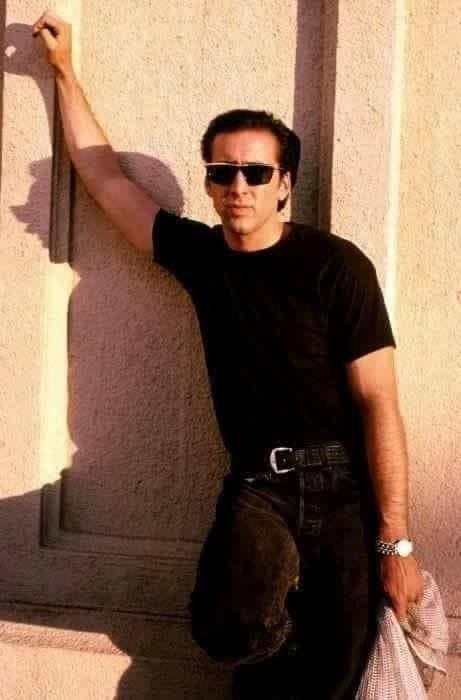
One initial observation was that there are two “states” that Cage usually shows up as in his movies. In one state, he is recognizable as himself as one would see him in the street, close to his self-actualization in real life (and as in real life, often in a leather jacket). He appears to play something like a more exaggerated version of what is perhaps his ideal self; quicker, faster, snarkier, sexier, better dressed. In National Treasure, he is not just smart, but outsmarts everybody around him—his friends, his enemies, the government.
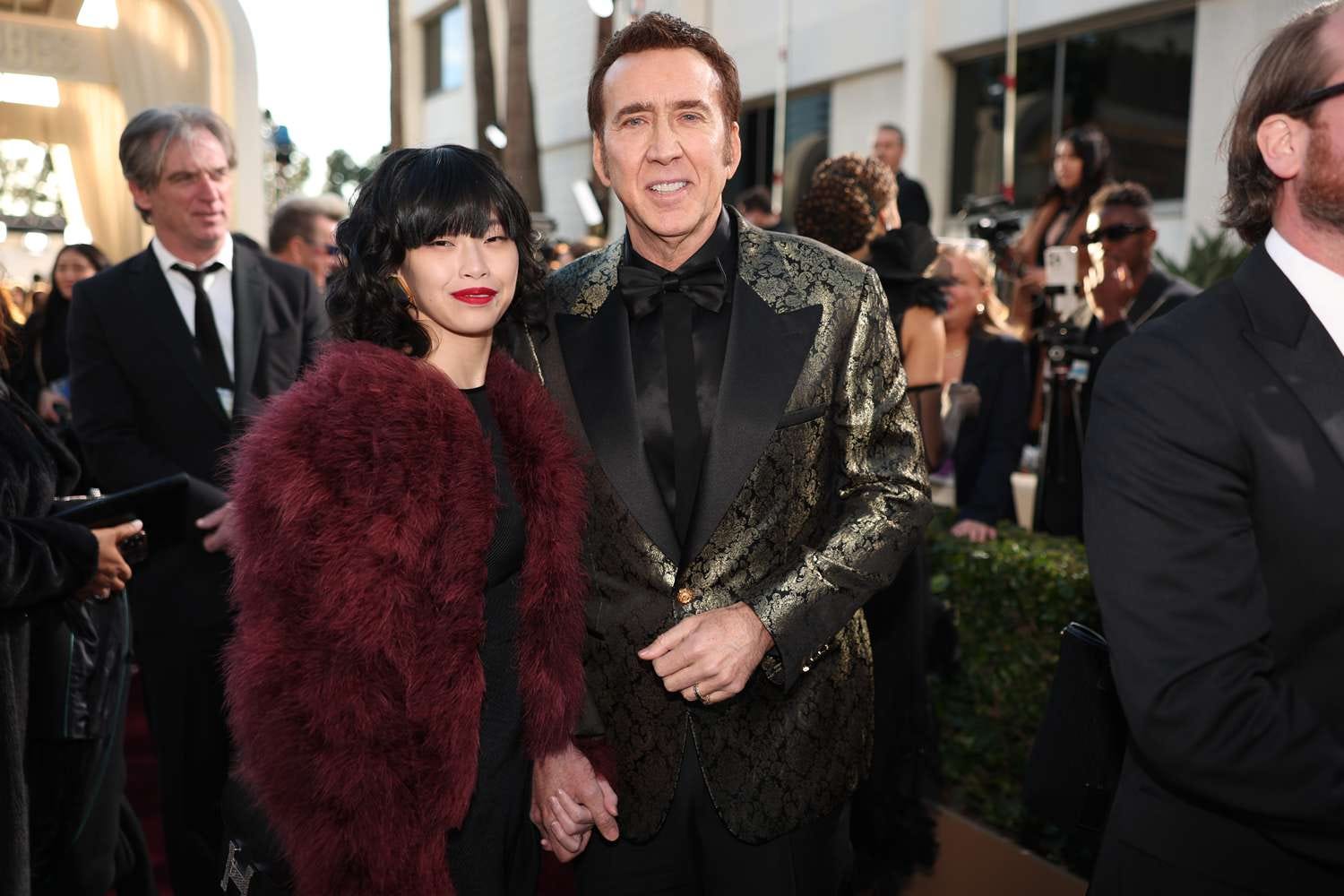
In Wild at Heart, Cage is a Gosling-esque heartthrob at the center of the literally Lynchian romantic comedy. Tall, handsome, in his leather jacket, we see Nicolas Cage acting while still looking for the most part like himself.
In the other state Cage changes his makeup, hair, clothes, and posture so much for the role that he is not easily recognizable. He melts into the role of the character. He becomes invisible under the layers of character, clothing, and makeup.
Dream Scenario showcases Cage as a balding man with intentionally unflattering clothing, a sky-high ego, and unkempt facial hair that is a contrast with his usual clean-shaven look.
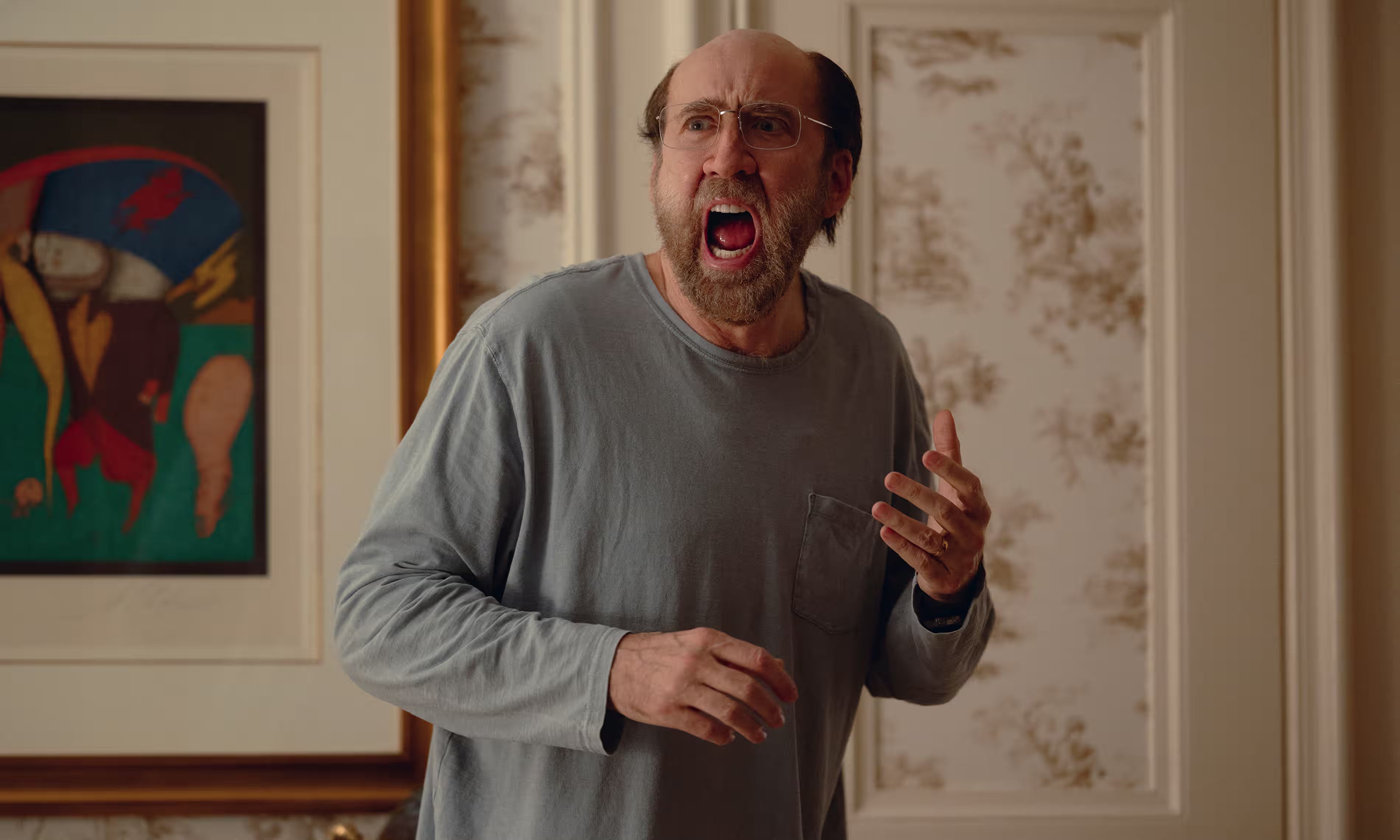
We will refer to these two states throughout as “sexy Cage” and “sneaky Cage.”
The two modes are striking in how different they are. With sexy Cage, Nicolas seems to be showing more of himself. In sneaky Cage, he goes undercover, embodying his method acting craft.
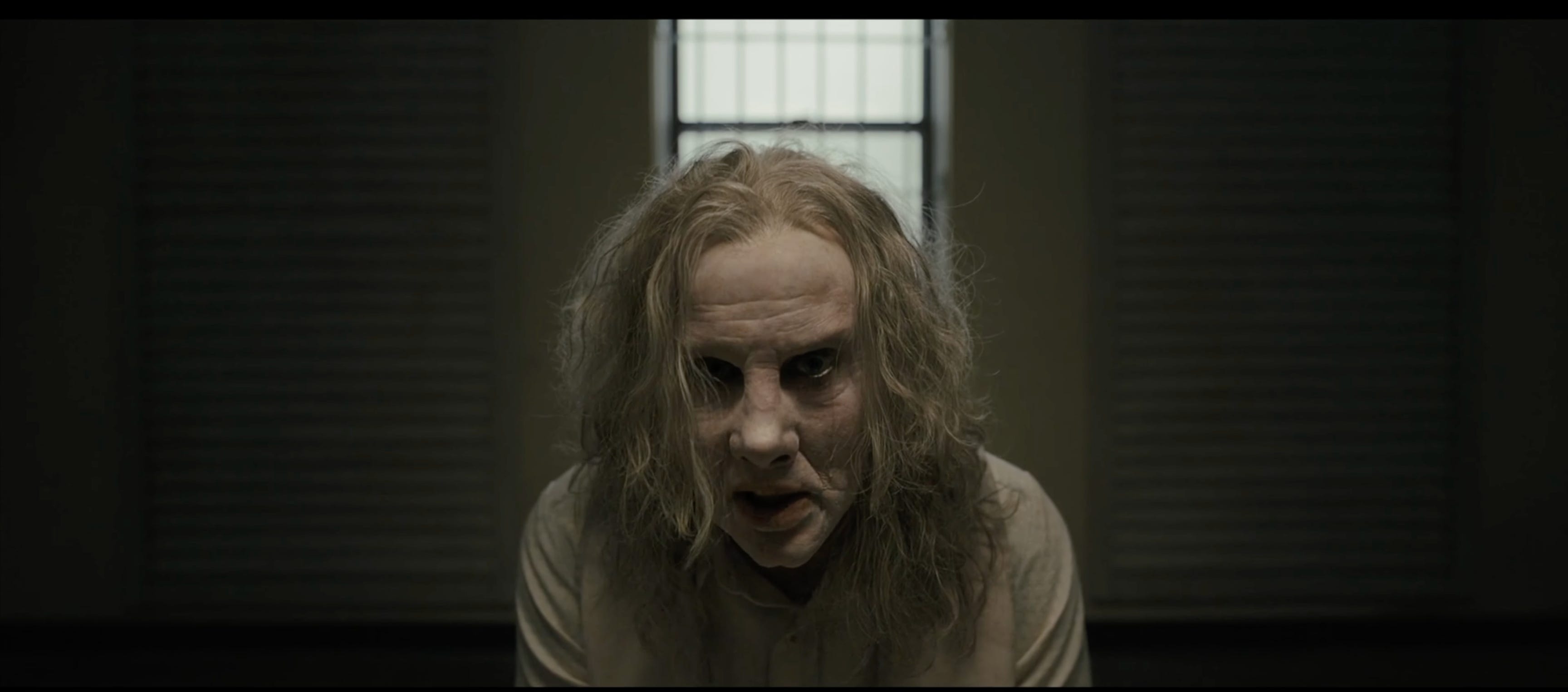
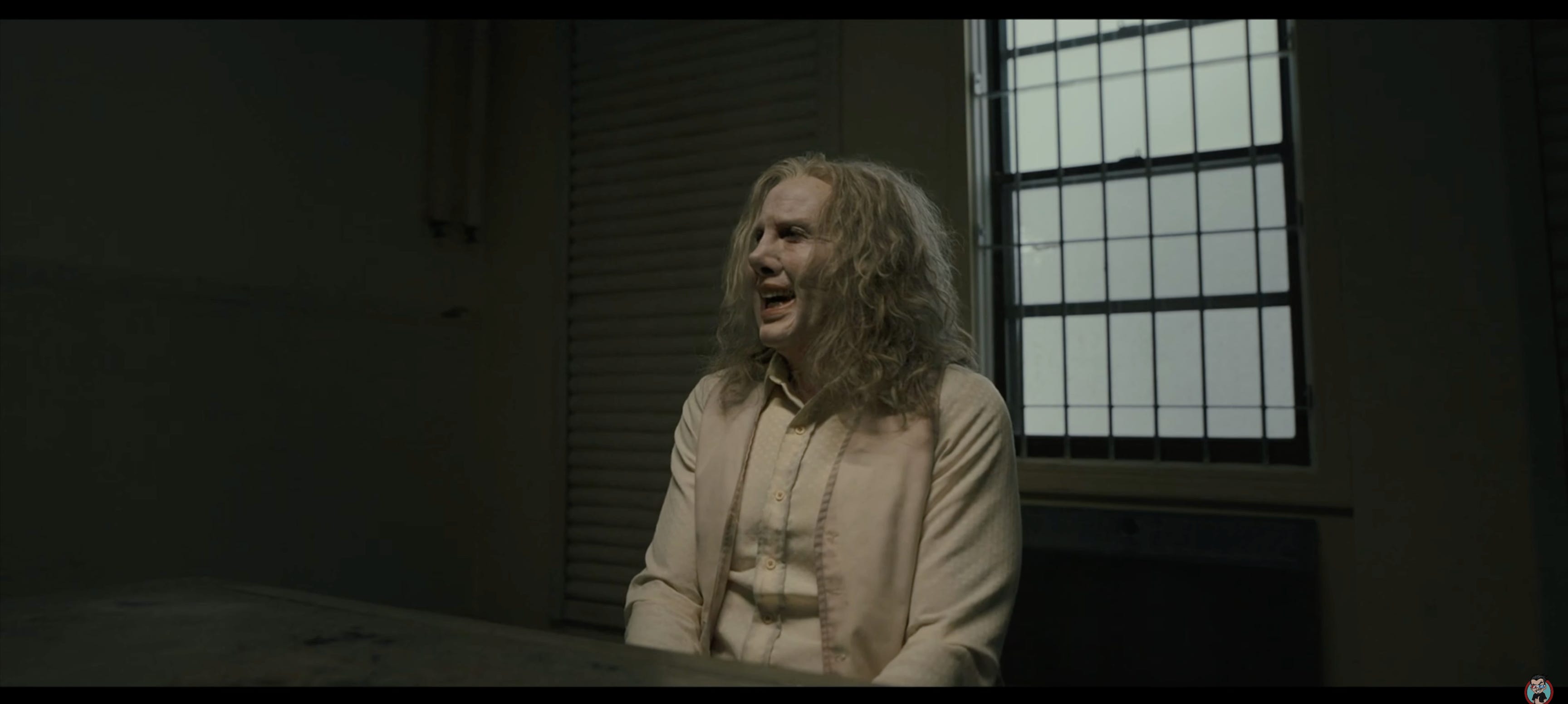
These two modes can be seen as an axis, with the two modes holding each other in tension, that can make clearer and more vibrant what is happening in the middle. This is a mode of problem solving I have been taught to use sometimes when I am stuck in an analysis in which there seems to be a lot of data, but some of the data feels disproportionately sticky given its importance, and some data isn’t bubbling up as much as it probably should. (My training in this area has revolved largely around tickling automatic thoughts and other trauma shapes.)
The Cage Film as Metacommentary on the Cage Film
One piece of evidence that we know that the Cage phenomenon is real is that the movie industry managed to make not one, but two Cage films that serve as metacommentary on the phenomenon—two Cage films about the phenomenon of Cage films—and they made sense.
The first two films we watched during Cage Fest were metacommentaries on the Nicolas Cage phenomenon: Dream Scenario and The Unbearable Weight of Massive Talent.
In Dream Scenario, Cage stars as an intentionally unpleasant university professor who starts showing up in people’s dreams. This remarkable concept is unfortunately not extended very far; only two “scenarios” of dream Cage are portrayed, and the massive imaginative potential of the concept is underused, instead leaving the film as an attempted social commentary of the dark side of Academia. Cage’s performance, as always, is terrific, but the script falls short of its promises.
Not having had enough of Meta-Cage, the next film was The Unbearable as an attempt at redemption of the concept, and it worked! This film redeemed and brought vitality back to the concept of a meta-Cage Cage film.
In this film, Cage is not just “sexy Cage”, but he actually plays himself. Mimicking his real life, the plot revolves around Cage needing some cash and taking whatever gig happens to come his way, whether good or bad, and so accepts a gig to attend a fan’s mysterious birthday celebration. The kinds of chaos, good feelings, and action that follow are reminiscent of Cage’s name to fame, National Treasure.
Between these two films we start to see the range of Cage’s acting; in some films, he seems utterly like himself—the Nicolas Cageness of the actor is overt, important, and unmistakable. In other films, his character is so convincingly not him that it could be played by anybody—which is functionally not true because going so deeply into a character that the actor is not noticed is the hallmark of a great actor. In this case, it is a great actor who is Nicolas Cage.
And so we have a question: which of these movies is more of a “Nicolas Cage” film? The Unbearable Weight of Massive Talent in which we see Cage as we expect him to? Or Dream Scenario, in which Nicolas Cage hides himself, and so shows more of his intense acting skills?
Is sexy Cage or sneaky Cage the real actor Nicolas Cage?

Feral Cage
One more style of Cage acting may help us with this question, in establishing another Cage-style either in the middle of, or outside of the tense axis (sexy-sneaky) that we have established so far. I will call this style feral Cage.
Pig, one of Nicolas Cage’s masterpieces, is another film in which Cage is completely transformed as a ferocious folk hero, unflappable when circumstances force him to re-enter the civil world. Pig succeeds in having a very unpredictable plot, yet its joy is not in its unpredictability, but rather in the impressive acting, the lush cinematography (everything is green, earthy, moist, connected to the earth), and has themes of a basic, tender love.
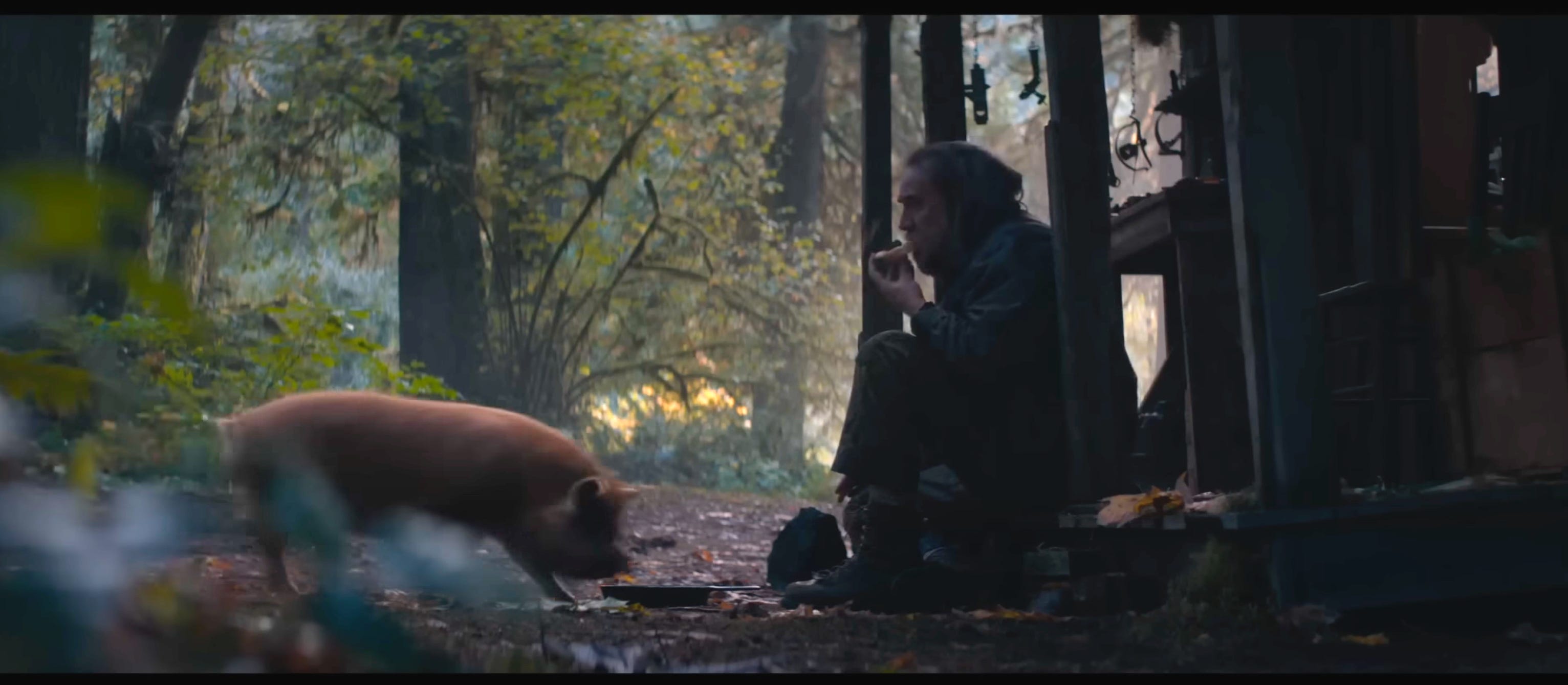
It is one of my favorite movies.
WIllie’s Wonderland, along with Pig, I would argue is one of Cage’s most masterful performances. Similar to Wild at Heart, Cage is sexy Cage and recognizable as himself, and yet we see his full competence as an actor; Willie’s Wonderland is a unique performance in that Cage does not utter a single word in the entire film. It is not a silent film; the other actors use words. But the character Cage plays, who is the lead, does not say anything. It is sexy Cage showing off what he can do just as sexy Cage.
Longlegs is an interesting contrast, in that like Willie’s Wonderland it is also a horror movie with colorful urban cinematography, but in this film Cage is the opposite of sexy Cage, and plays a lot with his voice in creating a terrifying character.
What makes a Nicolas Cage Film?
We start to see some of the qualities that make a Nicolas Cage movie. Nicolas Cage is so often the lead actor because he stretches the possibilities of the movies he is in by being in them. He pulls the movie in directions they might not go otherwise. His choices often guide movie as much as the director. In this way, the Nicolas Cage cinematic universe entails the risks he takes on both in terms of the choice of projects and what he does with his roles.
In each of his films, what Nicolas Cage brings is a spirit of working through the role, on camera. He is solving the problem of how to play the character on screen. And this sort of thing does come out. This is not self-evident: some people act because they want to prove a very specific point, or they want to be many other people, or they want to be hot, or they want to be part of a specific tradition of acting (see: Stephen Fry or Hugh Laurie).
The Actor Defined by His Work
Walt Hickey points out that despite some people saying that Nic Cage’s work ethic hasn’t panned out to much, Cage did end up doing quite well:
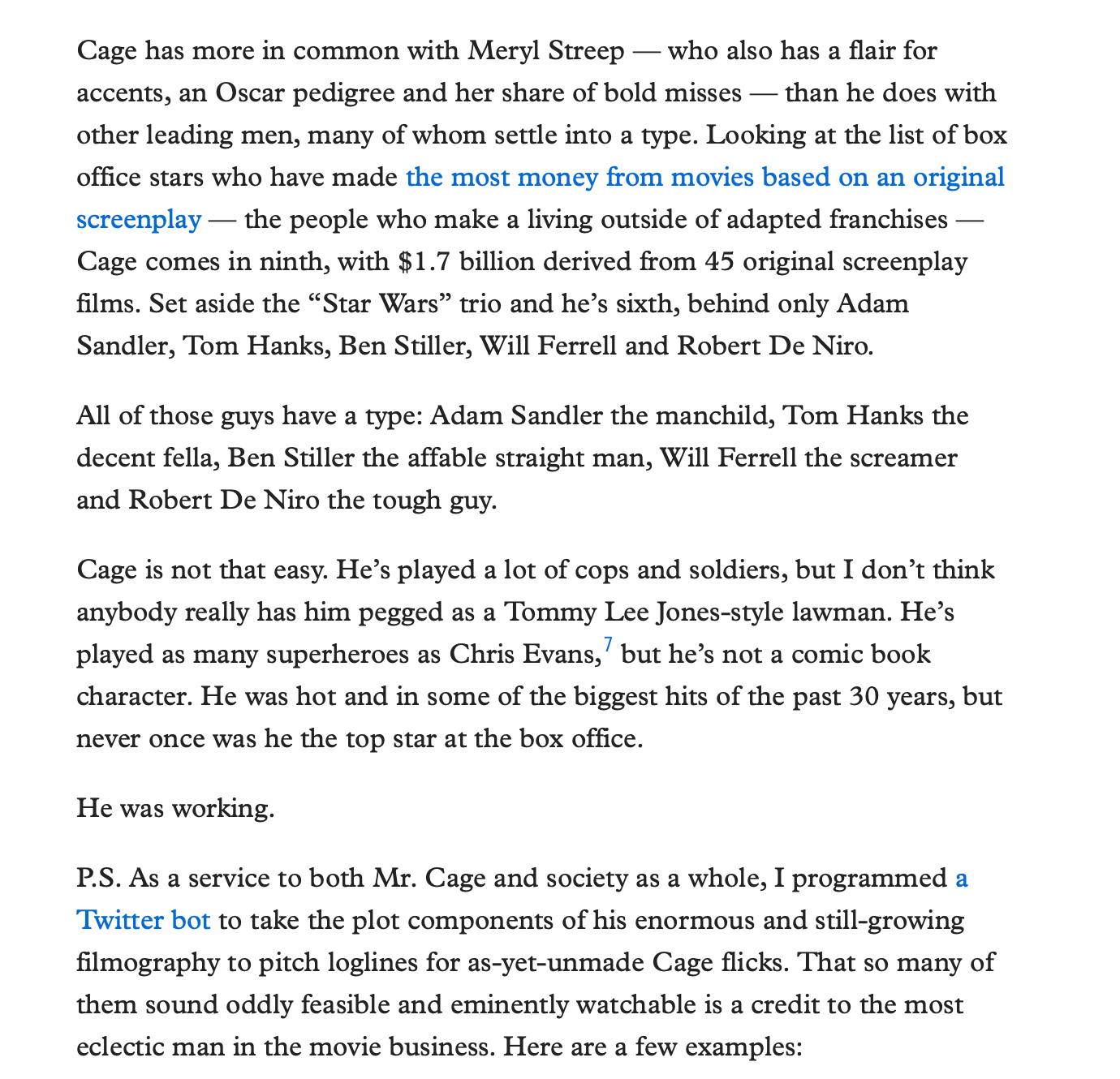
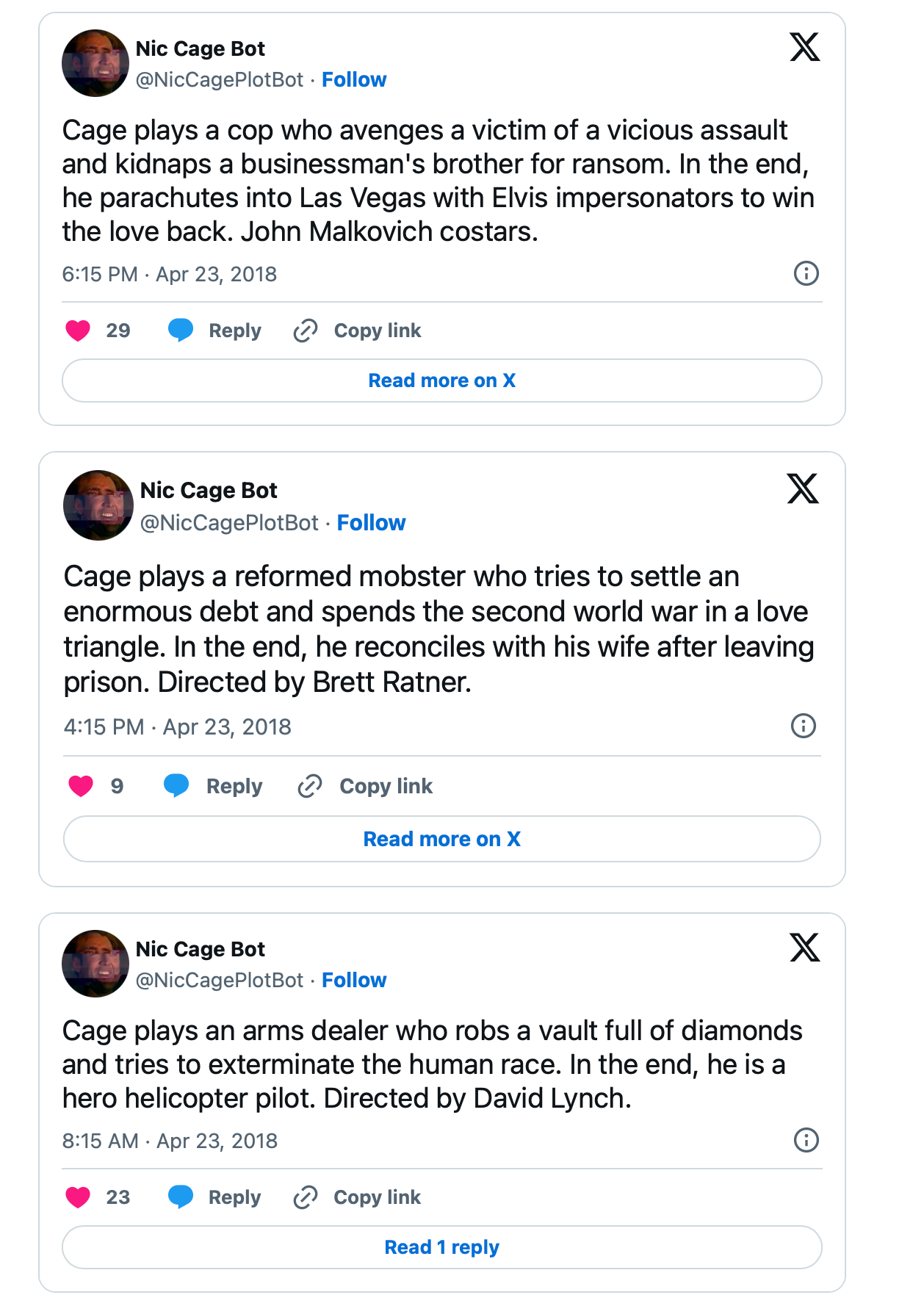
The Nic Cage Plot Bot: https://x.com/NicCagePlotBot
It is interesting that casting Cage in your movie hoping to get what you get when you cast Cage causes that Cage not to show up, dropping your film down a tier. It's hard to beat Matchstick Men Cage, which I think was the peak Cage Cage. Cage was playing a paranoid Cage before he became the meta Cage.