

One of the hard parts of writing is being your own editor, as you write, in real time, destroying ideas before they even get to poke their head out and utter any sounds, let alone sing their songs or make clear what they were born for. “Kill your darlings” was writing advice that was meant for would-be-established writers, in an era where writers wrote for newspapers and magazines as their main outlets and expected a mid-sized general audience readership if they got far along enough in their craft. It is not great advice when you are starting out, without a commission for a piece, and without a staff editor who will both encourage you when you are down and cut you down to size when you are too into yourself and forget that your reader exists, keeping you in relative balance, while still shepherding you to grow upward both in terms of the minutia of your craft and in the risk and stakes of the actual ideas.
Without an editor, I have to be cutting for myself.
Editing is a cutting profession, not just in terms of “making cuts” but as a dispositionary stance. You can call it being “Type A,” “Enneagram 1,” “ENTJ,” “fucking asshole,” or “have another cigarette, why don’t you,” “stupid cunt bitch.” Since every writer has to be their own editor at some point in the process, writing is a cutting profession too.
It is fitting, perhaps, that on the plane to the Bay to join a monthlong writing residency, it seemed like the right time to do something I wanted to do for about a year, which is to rewatch The Devil Wears Prada.
This is the movie in which Meryl Streep plays a fictional character, Miranda Priestly, based on a novel of the same name written by one of Anna Wintour’s personal assistants.
It is a movie I watched when I was a teenager and had not revisited since, but it ages well the more I’d aged. It reminds me of Basic Instinct in that the structure of the film itself changes the message that the events and dialogue seem to deliver, and even just one rewatching uncovers a lot of key details about the actual point of the film.
One thing that is clear on a second rewatching is that the Meryl Streep “cutthroat boss bitch” character is not the villain. The devil is in the details; she is not the titular devil. Sometimes even being a cutting standards setter is appropriate for the purpose and environment and as I’ve aged any “mean boss” feelings about her that I might have followed along with in a shallow viewing have melted away and left just a normal respect for a woman doing her job and doing her job well, while understanding both the demands of the role and the tradeoffs.
I have been thinking lately about the need to have domains in life where you can be cutting — where the cutting is productive, not destructive. Where the cutting adds something. I imagine an architect, complaining about where to place a window — “No, not four feet. It has to be 4.4 exactly” — her cutting, critical words actually serving as direction for builders in the act of creation, not destruction.
I think this is important because so many people are afraid to destroy, but this urge to do things the right way, or to think in ways such that there are right answers that can be found if one thinks about it long enough with enough precision, taking into account past mistakes and future considerations, is a real need and a natural need.
People need to be both kiki and bouba. They need practice and domains for being each. If they always have to be just one, the other comes out in bizarre ways, at bizarre times, that can hurt the people around them. Being too sharp too much of the time, inappropriately, can be bad, as can being too soft too much of the time.
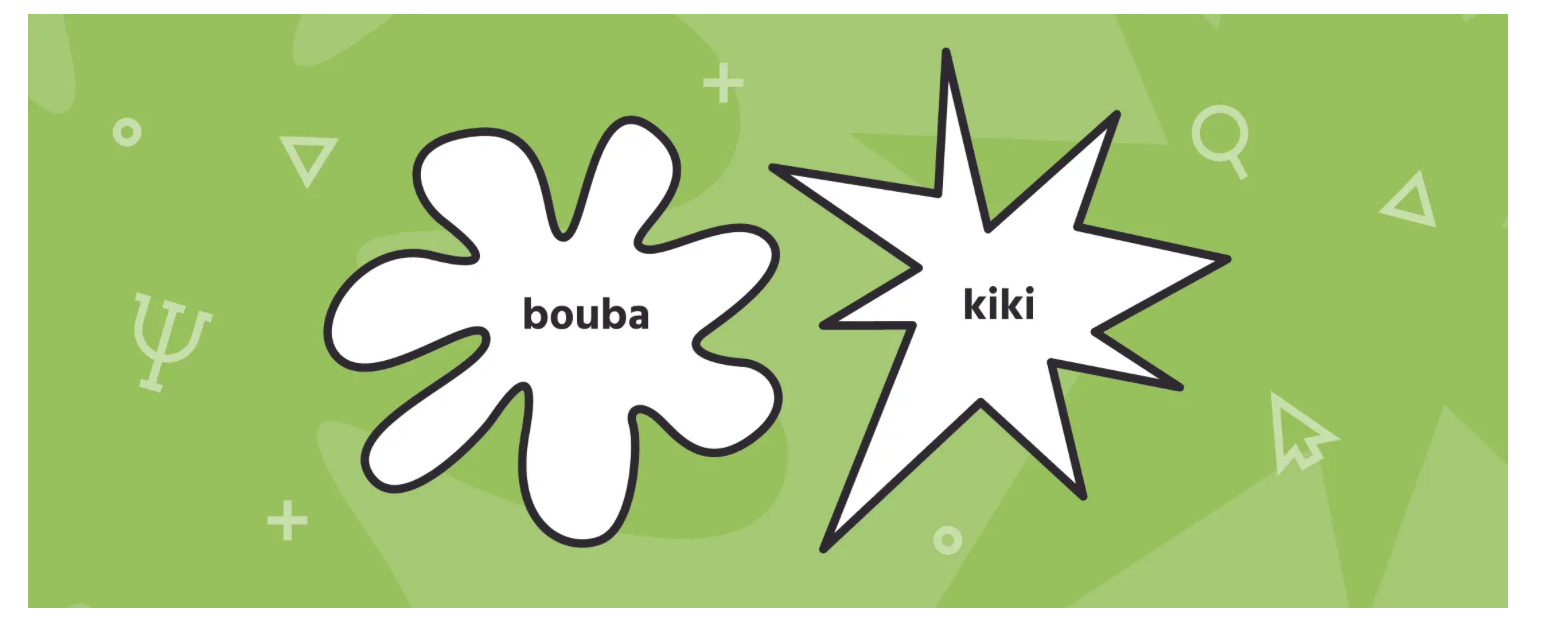
For these reasons I started thinking more about archetypes around being cutting. Species of kiki, species of bitchiness.
I paired The Devil Wears Prada with another film on the plane, The Accountant. I thought it would be interesting to watch a movie that has a classic cutting feminine archetype (The fashion critic) followed by a classic cutting masculine archetype (The accountant). Both films did a nice job of including characters of the opposite gender of the general stereotype.
Have you tried using AI as an editor? Extraordinarily sycophantic, but can be helpful at times.