

After 17 days of not writing the book I don’t want to write, I am starting to want to write the book.
My guess is all these posts will be paywalled later, for people who want to learn about the kinds of notes and reflections that go into the construction of a book.
For some reason I am inspired to just start the book today. I will go ahead and write the first section.
Everything introduction-shaped from all the blogposts so far, and the google doc, is here now.
TABLE OF CONTENTS SECTION - SOMEWHERE IN THE INTRODUCTION
About this book
“Intimacy sounds like it might be nice, but I hear that it involves so much talking. Is it really worth it?”
Insofar as a relationship is two souls burning around each other, any relationship, no matter how smooth or compatible, will require movement in order to keep the dance going. The dance will involve at times the holding of a hand, at times the reaching towards each other while apart, at times taking a step in a complimentary direction with your back towards each other. There are a number of movements, from any one spot, that can create more flourishing, joy, growth, and understanding of each other.
Ballroom dancing is a sufficiently strong metaphor that I do recommend spending some time ballroom dancing with your partner. A clenched hand means you cannot spin your partner without hurting them. A push or a pull with structure or vision can magnify momentum and look very beautiful, but a push or pull without structure often halts whatever momentum you had and restarts it. Sometimes this is exactly what you need, but wouldn’t it be better to know what tools exist, so that you can operate at the precision you desire? Perhaps you want to learn how to do a more delicate step sequence; perhaps the complete opposite. Perhaps you want to know how to expand and be wilder, freer, than you ever thought was possible.
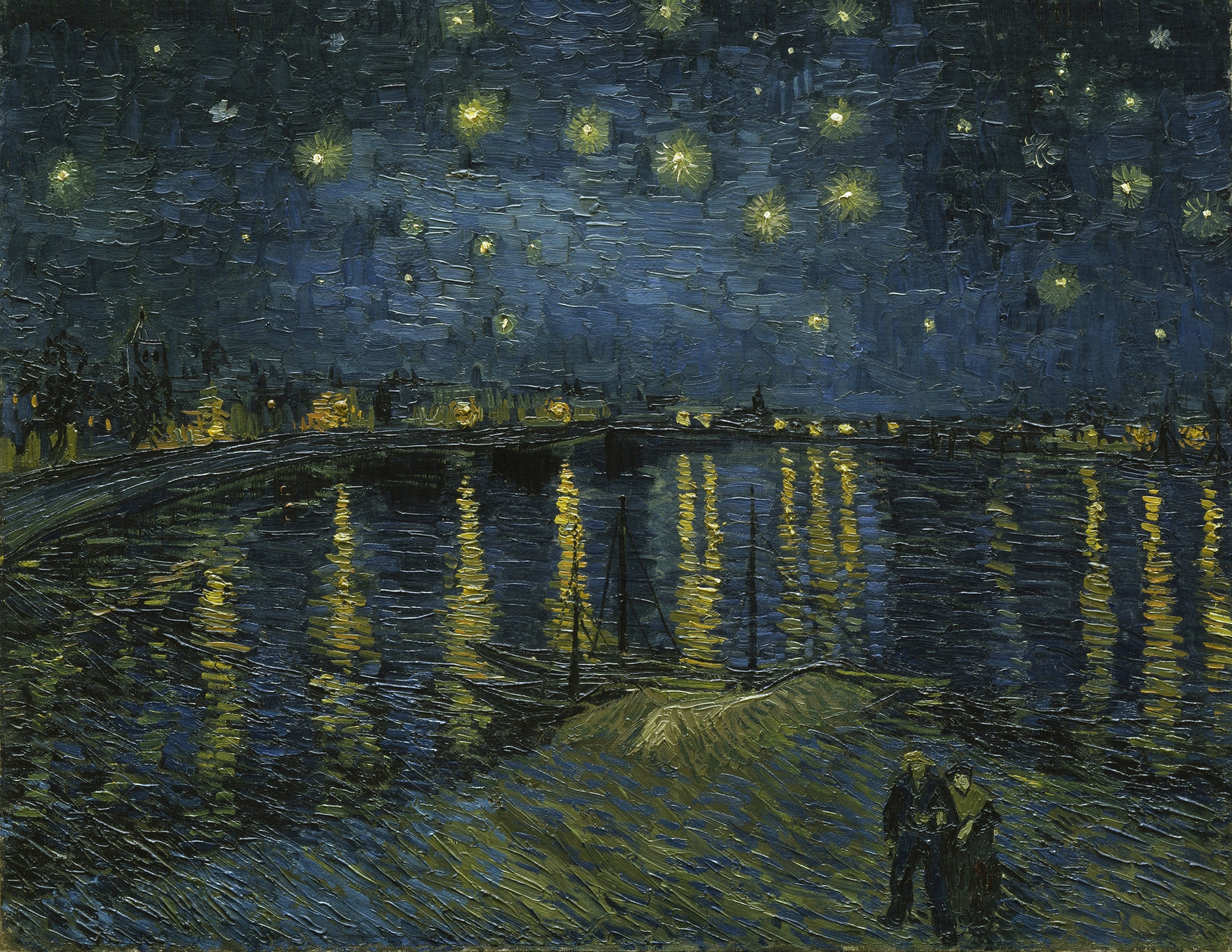
This is a book about constellations of feelings. It is about how the connections between feeling-stars can move and change over time. It will be a book about uncovering your authentic feelings beneath what you think are your authentic feelings, and what moves you have for those authentic feelings, to over time be more like yourself.
Any relationship, open, closed, or anywhere in between, will involve effort, in so far as momentum is force times time. Creating a “force” takes effort, in that you have to observe the outside world, have to observe yourself, have to observe your partner, and have to observe your impact and the size of your impact. If “observation” did not take any effort, then at our resting state, we would need as much food to sustain ourselves as does a snail, with its much smaller nervous system. The truth is that observation does take effort, and putting in the effort to learn to observe better compounds exponentially in your benefit.
The effort can be used to obtain more information, or to prevent yourself from gaining information you would rather not know, because knowing the information would make you accountable in “acting as if you know the information.” Effort can put put into a practice of curiosity, or it can be put into a practice of self-defense or resistance. If you know, for sure, that you need to break up, this can be very heartbreaking and require many uncomfortable life changes. Sometimes it seems better to not know for sure.
This effort can take the form of talking; it can take the form of resistance to talking; it can take the form of maneuvering anger or suppressing anger. But unless two lovers choose to let slack their end of the rope, as long as there is a cord between two lovers, effort is what is keeping the rope tense enough to maintain the relationship.
This book was written as an aid for lovers to figure out the steps in their dance, if they want it. Perhaps you are in a happy relationship and want it to be even better. Perhaps you are in an unhappy relationship, and do not know if you want to put effort into the relationship, or end the relationship.
Is it worth it? These conversations can be difficult because conversations about intimacy naturally will involve discussions of fear, loss, jealousy, priorities, and even grief. When these conversations are difficult, sometimes it is when parties kick each other’s shins, let go when they need to hold on, or cannot clarify when they need to brace for a fall. But sometimes it is because they are intrinsically difficult. In either case, a compass can help with the navigation.
One challenge in navigating extended intimacy is the navigation around the desires of more than one other person – but this interpersonal navigation is only a small part of the challenge. The greater challenge is navigating how any set of two lovers can help make each other’s dreams come true while holding each other in their fears.
This book contains exercises, common mistakes, and terms of art that you can use as guideposts in your journey.
This book is a book for advanced practitioners. It is for people who had already decided they have reasons to go down this path. Now, they want to be good at it.
This would mean paying attention to more things. Being good at extended intimacy does not just mean being good at intimacy. It means becoming more attentive, becoming better at noticing, becoming better at noticing other people’s fears, noticing your own fears, noticing other people’s fantasies, letting the hard times roll off, noticing your own hypocrisy, noticing other people’s different ways of “trying to be good,” acknowledgement of how your past trauma affects how you feel and how you perceive, and acknowledging how other people’s trauma affects how they feel and how they perceive. It means being gentle with deficit, scarcity, and imperfection, and not letting those real-life setbacks get in the way of a vision of abundance.
However, “can I turn a feeling I don’t like into a feeling I like feeling more” has been a focal point of my attention for many years.
This book is not a “download” of information. It is meant to be picked up and put back down. I want this to be a book that is a texture for people to “bounce off of” and think about their real life in new ways. I want this book to lead to actual conversations with themselves, their partner, and their reality. I do not want to download a framework or a philosophy to many people, except for perhaps one thing; that there is always a new angle you can use to look at the same problem. Sometimes it will be very helpful. Sometimes it will not be helpful. But the practice of looking at the same problem again, from another angle, is always a useful practice to know how to do.
How you got here
How you got here is going to affect your journey. There is no one way of having intimacy. There is no one way to have a relationship structure. There is no “one way of being monogamous” or “one way of being non-monogamous.” Your history and how you got here is going to be different from every other person. You may not have a choice around how you got here.
You do get to have a choice for why you stay.
You do get to have a choice for being good at being where you are, transitioning into something better, or transitioning out in a way that leaves all parties better off.
Perhaps you are in one of these situations:
You are in a relationship, and you want to know if you should get married or not.
You don’t want to be ashamed of personal impulses that ultimately don’t really matter for your feelings for your partner.
You are bisexual and would like to have a partner of each gender.
You are not in a relationship, but know that many people cheat, and you really don’t want to be cheated on. You would rather create a structure in which you know what is going on.
You are single and want to have a stable marriage that lasts for the rest of your life.
You want to add more stupid silly adventures sometimes, with your partner, without destabilizing other parts of your life.
You want to process the ways that your colleagues flirt with you in a way that feels more guilt-free and more relaxed.
You are a sex worker or an ex-sex worker, and want to find ways to integrate that side of yourself with your personal life.
You fell in love with somebody who identifies as polyamorous.
Somebody who is married has fallen in love with you.
You want to go to cool parties your ex throws while having a serious relationship.
You want to make jokes with your partner about your crushes.
You have a very high sex drive and want to have sex with many people.
You already know you are polyamorous, know you will only date other polyamorous people, but know that this requires an elevated skillset to coordinate and make work.
Because of the variety of circumstances, the book aims to investigate the “building blocks of relationship” on their own terms, so that you can interact with the components that feel relevant to you.
About the author
There aren’t that many books on polyamory, and the famous ones that people get around to reading don’t talk about the things that I would want to talk about.
When I read online forums about relationship troubles, I find that often enough I have to talk to my friends about them who have had experiences to know “what is likely actually going on” behind the text that people wrote. I have to do enough of different kinds of triangulation, that even though I sometimes benefit from the material I’m reading online, I would have to do a lot of extra things to it to make it useful to myself.
The “post-digested, post-chewing” thoughts are what I want to fill this book with. In some ways, this makes it difficult to think about. Usually what led to the consumption and digestion of the material, and making it my own, was my own pain. Some fight, some misunderstanding, some phenomenological overwhelm. The thoughts feel good in my brain, now, but in “trying to get them into a communicated shape” feels almost like getting back in touch with the original pain. I would like to create different intermediary steps for people to follow, such that it is not a “painful process they are following” to understand what I am saying, insofar as the process I followed for my own self was painful. I want to make something beautiful out of pain I had felt, but I don’t want the jagged painful thorns to be jutting out of my book, poking myself and my readers — and in part because that is not how it feels inside my brain, it is not how the experiences and the ideas settled, and a book that did that would be “dishonest” to my concept.