

“Work on your jealousy” — or many work on something else. There are a million feelings somebody can feel other than “jealousy.” Closing out your partner and not letting them explore what actually feels bad and how to communicate what feels bad with you, and sharing and working on that very specific thing, can be a big barrier to both intimacy and for making agreements that actually make both of you happy. You can end up starting to debate them, or starting to have fights with them, on terms that are extremely confusing to them and are not even close to the “lever” that would make them feel anything different.
Here is a very casual list of things that people can have a hard time with. I’m arbitrarily going to 500 words then stopping.
Some people are not into their friend group knowing you’re having sex with someone else. They are fine with it inside in their mind heart and body, but don’t want to explain it, don’t want to feel “socially cucked” for people who do not understand the lifestyle.
Some people are not into you doing “socially meaningful things” with another person. They aren’t into you spending holidays, valentine’s day, Christmas, with them. They aren’t into you buying them presents and jewelry. They want social exclusivity in these ways even if there isn’t sexual exclusivity.
Some people are really nervous about what you wanting sex with another person means about their own desirability. For them, what makes them feel sexually desirable and secure in their sexual desirability is sexual exclusivity.
Some people have a phenomenological hardship around thinking about genitals or moisture. Maybe they have genophobia. It is less “jealousy” as much as actual issues thinking about genitals other other people’s genitals. They may even have a hard time thinking about their own genitals or yours, but that gets pushed to the wayside when there are strong romantic feelings.
Maybe your partner is very demisexual, and simply cannot understand your desires. They are ambivalent about them. Maybe they let you do your thing and are okay with it, but feeling “good” about it or feeling “hot” about it is out of their current range because they are demisexual. They are not feeling jealous per se but are feeling confused about the whole thing.
Maybe your partner is bi, or you are all gay, and so your partner also feels attracted to men or women as you do, but does not know how to process their feelings of confused jealousy / wanting to participate / wanting to see it / wanting to be part of it / their own sexual desire for your other partners. Maybe your partner is only partially attracted to your other partners, and doesn’t know what to do with these feelings of partial attraction, partial repulsion, partial indifference.
Maybe your partner wants to have a super hot casual fling with you. Maybe they want to go on sloppy dates, get taken out for dinner, fuck in the park, drink shitty vodka. They get overwhelmed letting their fantasies get carried away around what you are doing with other people but are not doing with them.
Maybe they want security that the relationship is going somewhere that they actually want to go, or it not going anywhere but it still feeling good in some way, versus being a complete waste of time. If “exclusivity” is not the signal, they are waiting for another signal that is legible to them.
Finding a partner who wants to have children is very important to them, and you are not giving clear signals around if you want to have children with them or not. They are looking for either a signal you will want to have children, or a clear signal that they have permission to look for someone else to have children with them.
Questions
How often is what you call “jealousy” actually avarice—not wanting to lose anything, including dynamics that hurt your partner?
When you imagine your partner with someone else, what stings more: the idea they’re happier, or the image of how they’re being seen by that other person?
If you changed your agreements so you weren’t humiliated but still had to feel some jealousy, what would you adjust first?
“What symbolic spaces feel non‑negotiable to me?”
“What story am I using as copium instead of changing something?”
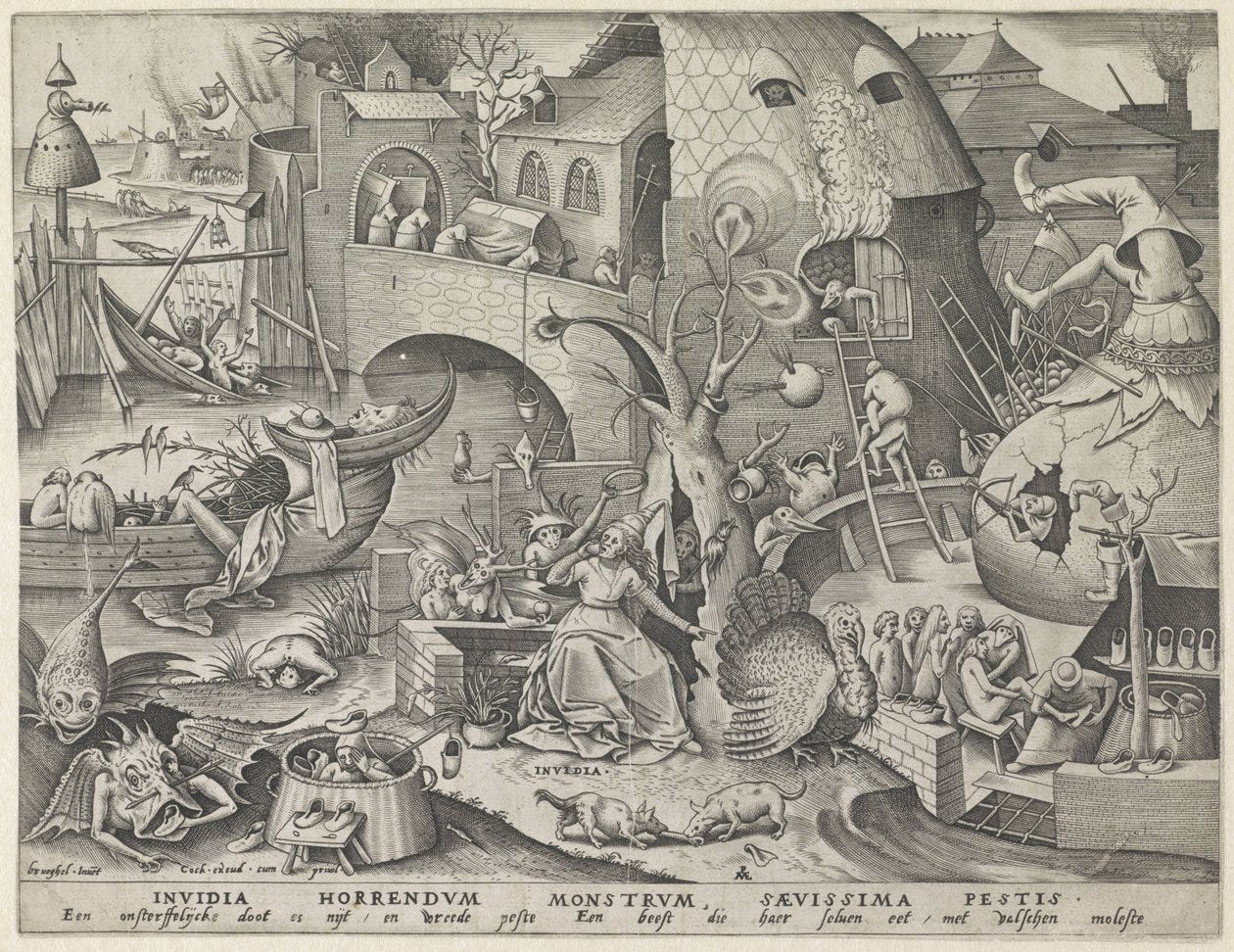
***** I should actually do a “7 deadly sins” thing here, with case studies.
“The seven emotional dragons of extended intimacy”
1. Jealousy – “The Comparison Dragon”
Essence: Fear that you are being replaced, downgraded, or losing something special.
How it shows up in extended intimacy:
Partner kisses someone else the way they usually kiss you, and it feels like your “slot” is being overwritten.
You see text history with emojis and in-jokes that feel like they should be “yours.”
Case study:
Alex and Sam agree that hookups are fine as long as they “stay casual.” Over time, Alex notices Sam texting one particular person constantly, sharing memes and life updates. The sex doesn’t bother Alex as much as seeing the same kind of intimacy they thought was unique to their relationship. Alex says they’re “jealous,” but when they drill down, what stings is: “You’re building our intimacy pattern with someone else.” The fix is less about “don’t feel jealous” and more about renegotiating what kind of intimacy is core and how to protect it.
2. Avarice – “The Withholding Dragon”
Essence: “If I’m hurting, I’ll make sure you don’t get good things either.” Righteous scarcity.
How it shows up:
One partner feels hurt and silently stops initiating sex, affection, or support, while telling themselves they’re just “not in the mood.”
Blocking opportunities (“I don’t want you to go on that date”) not because it’s unsafe, but because “if I don’t get what I want, you shouldn’t either.”
Case study:
Maya feels neglected because her partner Leo is exhausted from work and barely present. When Leo tentatively brings up wanting to explore a kink with another partner, Maya says “I’m not comfortable with that,” but internally it’s “Why do they get fun with you when I’m not getting anything?” This isn’t about boundaries; it’s avarice. Working with this dragon means admitting: “I want more with you, and it hurts to imagine someone else getting a version of you I don’t get.”
3. Wrath – “The Punishment Dragon”
Essence: Rage and the urge to punish—“You made me feel this; now I will make you feel something.”
How it shows up:
Explosive arguments after someone crosses a vague or unspoken boundary.
Threats to break up, scorch-earth texts, public shaming, or retaliatory behavior (“if you can do it, I can too”) justified as “fairness.”
Case study:
Jenna promised herself she’d be “chill” when her boyfriend went on a weekend away with his other partner. When he returns glowing, she feels a surge of humiliation and rage she did not anticipate. Instead of saying “I feel humiliated and scared,” she launches into “You’re selfish, you don’t care about me, maybe I should sleep with my ex.” Wrath here is a cover for unspoken needs: reassurance, tenderness, details that make the experience feel less like a betrayal and more like part of a shared story.
4. Humiliation / Cuck Feelings – “The Status Dragon”
Essence: Feeling small, degraded, or laughed at—especially in symbolic spaces.
How it shows up:
Your partner does a “couple thing” with someone else in a place or way that feels like it was supposed to be yours (your restaurant, your bed, your kink).
You’re not just hurt; you feel stupid, duped, or “less than” in some audience’s eyes—real or imagined.
Case study:
Ravi and Noor agree they can play with others at parties but “no overnights at home.” One night Noor gets drunk, brings someone home, and they fall asleep in Ravi and Noor’s bed. Even with apologies, what tears at Ravi isn’t the sex; it’s “you put someone in my place in our bed.” This is cuck feelings: symbolic territory violation. Repair needs to address the symbol (maybe replacing bedding, rituals to re-sanctify the space) not just the logistics.
5. FOMO / The Ick – “The Taste Dragon”
Essence: Fear of missing out plus visceral, aesthetic reactions to what your partner is doing with others.
How it shows up:
You’re not exactly jealous, but you feel vaguely grossed out by the person or scene your partner is in.
Or you feel left out of something that looks fun, while also feeling like you wouldn’t have enjoyed that exact thing.
Case study:
Dani is fine with her partner Max having casual flings, but when Max gets involved with someone who humiliates him at parties in a way Dani finds degrading, Dani feels a strong ick. Not because Max is with someone else, but because her image of Max is being altered in a way she doesn’t like. At the same time, when Max goes to cute poly movie nights with that person, Dani gets FOMO: “We never do that together.” The work here is separating:
“I want this kind of connection with you”
from “I don’t want that kind of scene attached to you.”
6. Sloth / Gluttony – “The Effort Dragon”
Essence: Not wanting to do the work, or wanting too much ease/pleasure to tolerate necessary discomfort.
How it shows up:
Avoiding hard conversations and expecting complex configurations to somehow work anyway.
Wanting the fun of multiple relationships but not the admin, emotional labor, or therapy that would make them sustainable.
Case study:
Two partners, both busy and conflict-avoidant, decide to “just see what happens” when they open. At first it’s thrilling; over time, unspoken resentments and scheduling disasters pile up. When things get painful, instead of sitting down with calendars and feelings, both binge-watch shows, scroll, and hope it stops hurting. Sloth here is the refusal to invest in scaffolding; gluttony is taking on more emotional/sexual input than either can digest. The dragon is fed every time they say “we’ll talk later” and never schedule the talk.
7. Copium / Self-Delusion – “The Story Dragon”
Essence: The stories you tell yourself so you don’t have to change or leave.
How it shows up:
“I’m just bad at jealousy” instead of “my partner is actually treating me badly.”
“This is just how poly is” when what’s happening is specific to one partner’s unreliability.
Or the opposite: “Monogamy is inherently toxic” when you’re in one very bad monogamous relationship.
Case study:
Lin keeps telling herself that her partner is “just more poly” and she needs to “grow” whenever he breaks agreements, shows up late, or disappears emotionally after intense dates with others. She reads more books, works on compersion, and never asks the question: “Is this person actually committed to my flourishing?” Copium here is a misuse of growth language to avoid acknowledging that the specific relationship might not be workable