

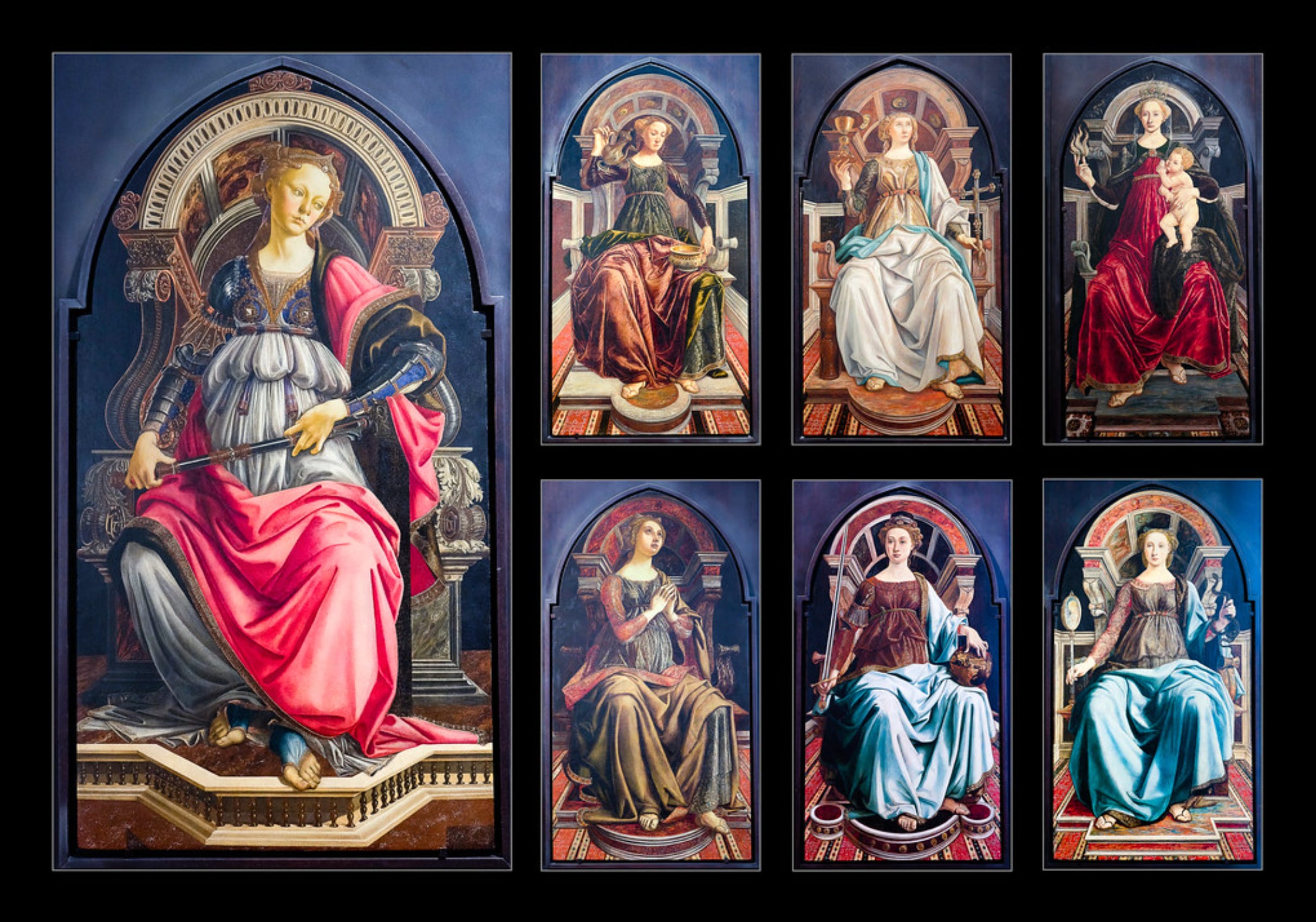
Here is a little taxonomy of competence and romance archetypes, as spotted at Inkhaven. This fails to include both everybody and everybody I had planned and wanted to write about. Part of the reason is because these are challenging to write! I got as far as I could in terms of inspecting the archetypes!
The story behind these is that I was sitting with somebody around a fire, and I told him that he reminded me of two people I knew who strongly channeled two seemingly diametrically opposed archetypes of competence that I never expected to see together in one person. He said he wants to hear more about this, and I told him I would write something blogpost-shaped. When I set down to write, I thought that one way to start was to notice the myriad of other rare hybrid competency archetypes at Inkhaven as well. Here are some of them.
The Scholar-at-Arms
He has the kind of candor that usually only shows up at 2 a.m. after the last train has gone and everyone has given up on pretending, except he has it all the time. He would rather risk being a little too honest than build yet another room where the good stuff just beneath the surface never actually comes up. His warmth has weight like a hand on your shoulder that does not flinch when you say the embarrassing part out loud.
The analytical sharpness runs under everything like rebar. He thinks in incentives and base rates, but also in jokes and stories and scenes from obscure films and books. You can watch him do it: a question comes in, and behind his eyes there is an explosion of references — books, studies, conversations on stairwells. He is well-read in the way that makes you want to read more yourself, not less out of fear of never keeping up. The references don’t feel like a flex; they feel like him passing you a book over the back of a couch with a “this one helped.” With him around, discipline stops feeling like a punishment and starts feeling like a kindness you extend to your future self.
The Toolwitch
She is a professor of tools, a quiet patron saint of affordances: she maintains not just the typewriter but the quills and the papyrus, the fountain pens and the weird thick double-sized paper that makes ideas feel heavier in the hand. Infrastructure is a love language and attention is affection.
Goth is not only an aesthetic but a technology of efficiency; it can fit in a small backpack and is a fine thing to wear in basically any setting and any weather. I can imagine her having her own harem of trained crows.
In her writing I hear her authentic voice loud and clear, as if she had trained to write from the heart in some previous life. The writing is a tool like the other tools and is also treated with the precision touch from the heart.
The Cartographer
He writes like someone who has been walking alone for a very long time and, somewhere along the way, started sketching maps so other kindred spirits would not get lost in the same fog.
There is a craftsman’s patience in the way he returns to the same questions — how to tell the truth without spectacle, how to keep the signal intact among the perils of drift and noise. He has a willingness to be seen mid-construction if it means someone else might recognize their own outline in the margins.
His words arrive without hurry, but they have a way of rearranging the furniture in your head while they sit there. By the time you stand up, nothing flashy has happened, but the room of your life feels differently lit, as if somebody opened a window you did not realize was painted shut.
Beneath the performance is an insistence that “audience” is made of actual people with sore spots and half‑finished lives. Even if he hands you a flashlight, you will still have long stretches when you walk down the hallway alone. What he offers is not revelation but a practiced, stubborn lunacy that makes it possible to trace the edge.
The Hibiscustrader
He has seen a lot; he is reserved, but interested. He has a fluidity with mechanics and an understanding of processes and their unfolding. He can have an exorbitantly adventurous night and come back home and cook dinner, standing barefoot at the stove with the same attention he uses to debug a system, tasting the sauce until it is just right.
It seems like he keeps his life simple, but up close it is layered with quiet experiments: new products, new drafts, new ways to run a business without running himself into the ground. He is one of those rare competent men who does not need to broadcast that competence; it shows up instead in the unremarkable miracles of things just working around him with fewer fires than you may expect.
His posture reflects the calm of someone who has already done a hundred practice reps in private. He knows when to mulligan a bad idea and when to keep a risky hand because the upside is worth it. But when it comes to people’s hearts, he does not play games.
He does not cause trouble, but trouble can come to him and find itself strangely disarmed, turned into a task list or a conversation on the porch with the sound of rain in the hibiscus leaves. He is not trying to be anyone’s hero but he is solid as a countertop with competence and warmth as if they were the most natural resources in the world.
The Graphdreamer
He looks like someone who spends his days inside a 4D coordinate plane, thinks in graphs and numbers, then he shows up at the bar anyway while in the middle of a proof in a soft t‑shirt and sneakers. He is still thinking in numbers when he appears, and when he switches into using words, the old habits stay. He is aware of his own limitations but would have to be pressed extremely hard to give up his sense of precision. He waves his arms, he points, he finds ways to make clear what he means; conversations in the air around him can go on forever because they are rarely debates and are more like diagrams in pencil: erasable, expandable, with enough white space that you can see. Whatever the Princeton of Europe is, he is like a professor there. He smiles easily; it is unguarded.
In the warmth and eccentric pointing, there is both a softness and a firmness. He wants to stay malleable enough to hear and understand the ideas. But he does not shy away from problems; he does not run away from them at all. And so he cannot be bullied. He bubbles forth in intense sincerity, annoyed that English cannot express the full depth of his ideas and feelings. He does not allow the ballast of speech to become overextended onto other questions.
The Worldwright
He is a bricklayer of realities who takes joy not only in the final castle but in each brick laid: each conversation, each problem solved, each has its individual joys distinct from its participation in the greater scaffold. The sum is greater than the whole; he does not just count his wins, he counts his wins twice. He is pragmatic and prudent in most affairs, but here he tips his toe into the morasses of gluttony.
He can respect and appreciate rules as a tool the universe provides that often serves him, either by allowing him to participate in the collective or in protecting him from whatever the rule was originally made for, but he is not afraid to dominate the rules to make them serve him. He is like a DnD dungeon master wrangling the map to build structures for intimacy – websites, documents, literal physical spaces. He learns the heuristics to control his environment, but he refuses to live solely in the clean realm of abstraction. He wants ash on his hands, the smoked‑out parts of people’s souls, the mess and the harbor and the boats coming and going.
The Jesterdesigner
He takes himself more seriously as a work of art than as an artist. This is his trade-off; if he is not one of the masters yet, he can at least allow himself to be a work in progress himself, transformed by the world, allow himself to be beauty in flux. He stands as if he himself is something that can be looked at, analyzed, prodded, to represent that he takes his art as seriously as he can, without taking it so seriously that the artistry is crushed in unmoving fixation.
He channels beauty into his fashion choices, in his choices of tools and accessories. It is not that he does not worry about the quality of his art production — of course he does. He asks himself the deep questions: what if the interior world of my own aesthetics is not as developed as I want? What if what I put out is not good enough — maybe it will be good to somebody’s standards, but what if it is not good enough for my own?
He perseveres. He creates his technical writing in his laboratory of discipline; this is where he allows his tightness and exacting standards to take over. Then he staves off the despair of the artist with the joy of play. He starts to experiment with his writing, now creating something completely vivid and associative and pornographic, with an intensity of humor and a noticeable lack of sadism despite the content. He is the art carving itself into its own shape, yelling out as each marble splinter ejects. Yet this man does not divorce himself from his boyhood, does not fully indulge in dark masculine vices. He is balanced, serene, competent, hinged; yet inside him there is an intense burning, glowing heart that flares out.
The Man in the Coat
There is the man in the good coat who at first reads as extremely sharp and analytic and maybe a little intimidatingly put‑together. But after five minutes with this person you see a ridiculous softness, like every rabbit in the world decided to unionize and set up a homeland behind his eyes.
When he looks at you there is this feeling that he is tying your shoelaces for you in slow motion, showing how to do it and making sure they will not come undone on the walk home.
He keeps a fierce tenderness for people who are trying to push themselves, people who don’t yet feel like they belong in any “we.” As responsibility widens around him, his bones seem to grow to meet it through a patient faith that people can learn to be strong on their own behalf. He holds a quiet sadness alongside a calm, sturdy devotion to being in the world. Life is the medium through which joy is made real.
I wonder who those are
you know the archetypes hit different when you can see yourself in many of them. beautiful! I quite like the "hibiscustrader"